

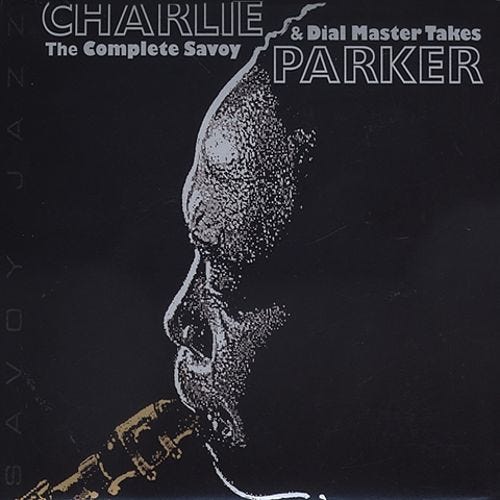
[Update: Soon after I published this, the amazing Miles Okazaki cross-posted it and called back to his own Donna Lee disquisition, an all-time definitive deep dive. Wow, is all I can say. And back to the shed.]
For years I’ve been busy doing my own thing on the guitar, informed in lots of ways by my jazz training and sensibility, although not really a part of that world. I don’t gig as a jazz player, I don’t have reams of standard tunes at the ready, and whenever I dip my toe back into that discipline, the rust is evident.
It’s been a long time since I’ve played bebop heads like “Donna Lee,” and I used to play them a lot. But I never really liked how I played them — as a listener, listening to myself. Ultimately, I put that work aside and went another way.
Right now I’m building on later-in-life insights about how to use my left hand on the guitar, but the thought of revisiting something like “Donna Lee” has been unappetizing — I knew I would need to change all the left-hand fingerings and start fresh, knowing what I know now, as a player of 44 years.
At the root of it, I really didn’t want to hear myself play “Donna Lee” badly, over and over. But then I thought of a solution: Don’t play it badly.
I came across the chart in an old box of stuff and left it on the stand for a few months, but I finally decided to leap back in. The results have surprised me.
(According to this guest post on Lewis Porter’s must-read Substack, Miles Davis composed “Donna Lee,” although Charlie Parker is widely credited. The story is complex and worth delving into.)
Back to My Old School
I started as a classical guitar student at age 14. I did well. My reading was already OK thanks to five years of clarinet. After a while I got an electric and started playing rock. Then my new rock/pop teacher gave me my first grounding in jazz — looking back, although that teacher wasn’t strictly speaking a jazz musician, he did a very good job on some fundamentals.
Then I attended Berklee (’86-’87, before transferring to the New School), and I worked from the Bill Leavitt guitar method books (though my private teacher, the late Al DeFino, showed little interest in those). In fact, if memory serves, I’d already started the Leavitt books before college.
I am not knocking the Leavitt books, and I can’t speak to Berklee’s current approach. As I remember, the scale exercises and fingerings in Book 1 were position-oriented, vertical box–oriented, and I picked up the habit of (sometimes) starting patterns on the second finger, also making extensive use of the pinky. I’m inclined to say the Leavitt method reinforced the left-hand classical approach I had already spent a good deal of time with, so it felt right to me.
When I got to Berklee I started to shed “Donna Lee” day after day — it became my warmup in the practice room. Looking back, I got nowhere with it. I could never play it fast, but beyond that, it felt clunky rather than flowing and never really blossomed into music, at any tempo. That, mind you, is today’s assessment, with 20/20 hindsight. I wasn’t focusing enough on musicality, even though I was in music school. That was the problem.
Bebop, Roots & Rock
Much later, after years of playing (and singing) ’70s-’80s pop songs on guitar, picking apart harmonies from Hall & Oates to the Spinners to Stevie Wonder to Supertramp, coming up with chord-melody approaches to hard rock, prog rock, New Wave, soul and R&B, I find I can now approach “Donna Lee” in a very different way.
It’s not scribbles on a page, and it’s not Miles Davis striking an ironic stance toward what “Donna Lee” is based on, which is the standard “Back Home Again in Indiana,” by James F. Hanley and Ballard McDonald, put into mass circulation by the Original Dixieland Jass Band in 1917 (key of A-flat, same as “Donna Lee”), then taken up by Red Nichols, Eddie Condon, the Casa Loma Orchestra, Lester Young, Chu Berry, Don Byas and others.
“Indiana” then became a staple of Louis Armstrong’s All Stars repertoire from 1951 onward (A-flat again). It also gained an association with the Indy 500 as a kind of ritual opener, with Jim Nabors on the vocal (key of F, Eddie Condon’s key as well). If you want the original written melody with zero deviation, Jim Nabors is the guy.
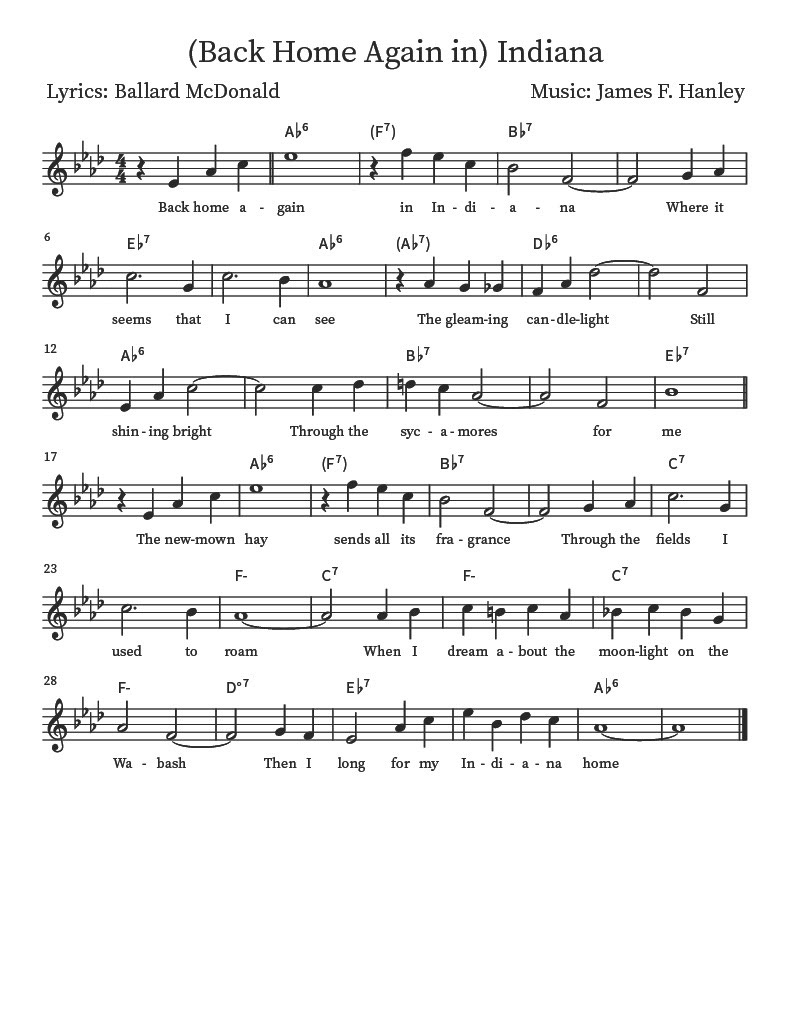
You should definitely lock into the lyrics — you’ve got to appreciate the contours, the phrase lengths, the exact pitches on “Through the sycamores, for me” and “When I dream about the moonlight on the Wabash.” Bird and Miles knew the source material and were fully engaged with it. (I can’t stop automatically singing “Ganges” in place of “Wabash.”)
If you fully digest “Indiana” phrase by phrase — it’s all chord tones, with just a touch of chromaticism — you start to get a sense of what the beboppers heard in it. Then you tackle “Donna Lee” on the guitar all over again and it starts to flow, like a song, facilitated by new and improved fingerings optimized for the instrument. (After reviewing and studying the tape, I’ve already improved one of the fingerings.)
Trying to get the feel of this exactly right with just the metronome? Pretty difficult, unnatural even. Playing it against the “Indiana” melody? Much easier, because I’m listening and responding to the actual music of it. This performance is not airtight, but it’s a heck of a lot better than in the Berklee practice room.
The core of my problem back in the day was this: The classical technique I developed at 14 got cemented under my fingers as the “right” way to do things, and it was my default approach toward “difficult music” in general. I figured: You play rock and blues one way, and then classical and jazz another way.
Not if you’re playing stuff like Count Basie and Lester Young, which is what Charlie Parker was reared on in ’30s Kansas City. And consequently, not if you’re playing bebop. All of it rocks, when you come down to it.
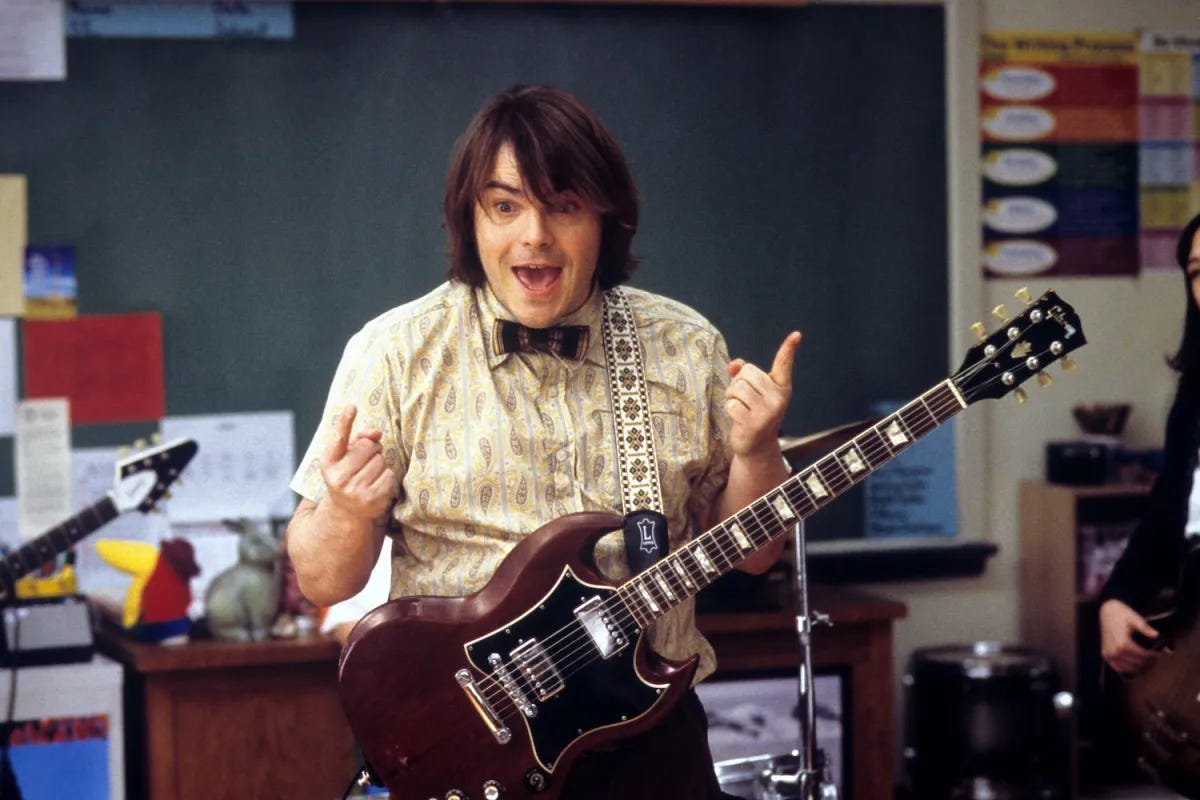
That one is more complex than the other is secondary. Both are more successfully approached on the guitar with a rock and blues sensibility than a classical one. The fingerings should more closely resemble Angus Young’s than Andrés Segovia’s. Without a doubt. But you be the judge. §
Cool post! I've never heard the two played together like that. Very interesting. It has much more to do with blues/rock than classical, I agree. The fingerings for DL really seems to be a puzzle or adventure of one's own choosing. I remember playing it for my teacher in undergrad jazz school, and he said, wow you finger that weird man! But whatever gets you through.
Nice work! The big game changer for me in learning bebop heads (and bebop anything really) was realizing the 8ths were a lot straighter than you'd think, especially at faster tempos—and that I needed to practice them more evenly slowly before speeding up, since if you swing them from a slow tempo you'll get used to that and by the time you get to medium up or up they'll be a jumbled mess. I'd be curious to know how you think about it on guitar!
P.S. agreed that Bird definitely didn't write DL—it doesn't even start in the right octave on alto!